Why this matters
Sialkot exporters can use AI to close the presentation gap between strong manufacturing capability and the digital information an international buyer needs before an inquiry.
The highest-value workflow starts with verified SKU and factory facts, then creates category-specific visuals, listings, specifications, catalogs, and buyer follow-up assets from the same source.
Sports goods, apparel, leather, and surgical products need different image and content systems; one generic product prompt cannot communicate every category accurately.
AI-generated content is a reviewable commercial draft. Samples, test reports, certifications, audits, factory capacity, prices, MOQ, lead time, and compliance claims still require real evidence and accountable human approval.
SEO and GEO visibility improves when exporter pages answer sourcing questions clearly, connect related product and industry pages, use descriptive image context, and give buyers a direct path to request samples or quotes.
Practical guide
Compete on buyer readiness, not AI novelty
Sialkot does not need AI to create a manufacturing identity. It already has one. The Sialkot Chamber of Commerce and Industry lists sports goods, surgical instruments, leather products, gloves, textiles, sportswear, martial arts uniforms and accessories, badges, cutlery, and other categories among the city's export base. SCCI also says Sialkot earns more than USD 2 billion annually through exports. That figure should be attributed to the chamber rather than presented as a new independent estimate.
The competitive gap often appears before the factory conversation begins. An overseas buyer sees a thin website, inconsistent product photos, an old PDF, vague product names, missing specifications, or a marketplace page that does not explain customization. Strong production capability can be overlooked because the digital evidence is difficult to evaluate. AI is useful when it closes that information gap quickly and consistently.
A current SCCI and SMEDA trade-delegation notice is a useful signal. Its selection considerations included an existing export portfolio, international certifications or quality standards where applicable, export-ready products and marketing material, and capacity to meet demand. Marketing material does not replace those other requirements. It helps a qualified exporter present them clearly. That is the right role for Ayzelify: compress the time between real factory capability and buyer understanding.
Build one verified product source before generating content
The safest workflow begins with a product record, not a prompt. Record the category, SKU or product family, material, construction, dimensions, size range, colorways, trims, branding methods, packaging, MOQ context, sample process, lead-time guidance, target market, and buyer use case. Mark every field as confirmed, estimated, buyer-dependent, or awaiting review. Attach sample photos, approved drawings, packaging references, test reports, and certificate records where they exist.
This product source becomes the control document for generated images and copy. A sportswear listing, buyer presentation, website page, and Alibaba draft should not describe four slightly different garments. The same rule applies to gloves, bags, instruments, or beauty tools. When a generated image adds a seam, changes a cuff, alters a surgical tip, moves a logo, or invents packaging, compare it with the product source and correct or reject it.
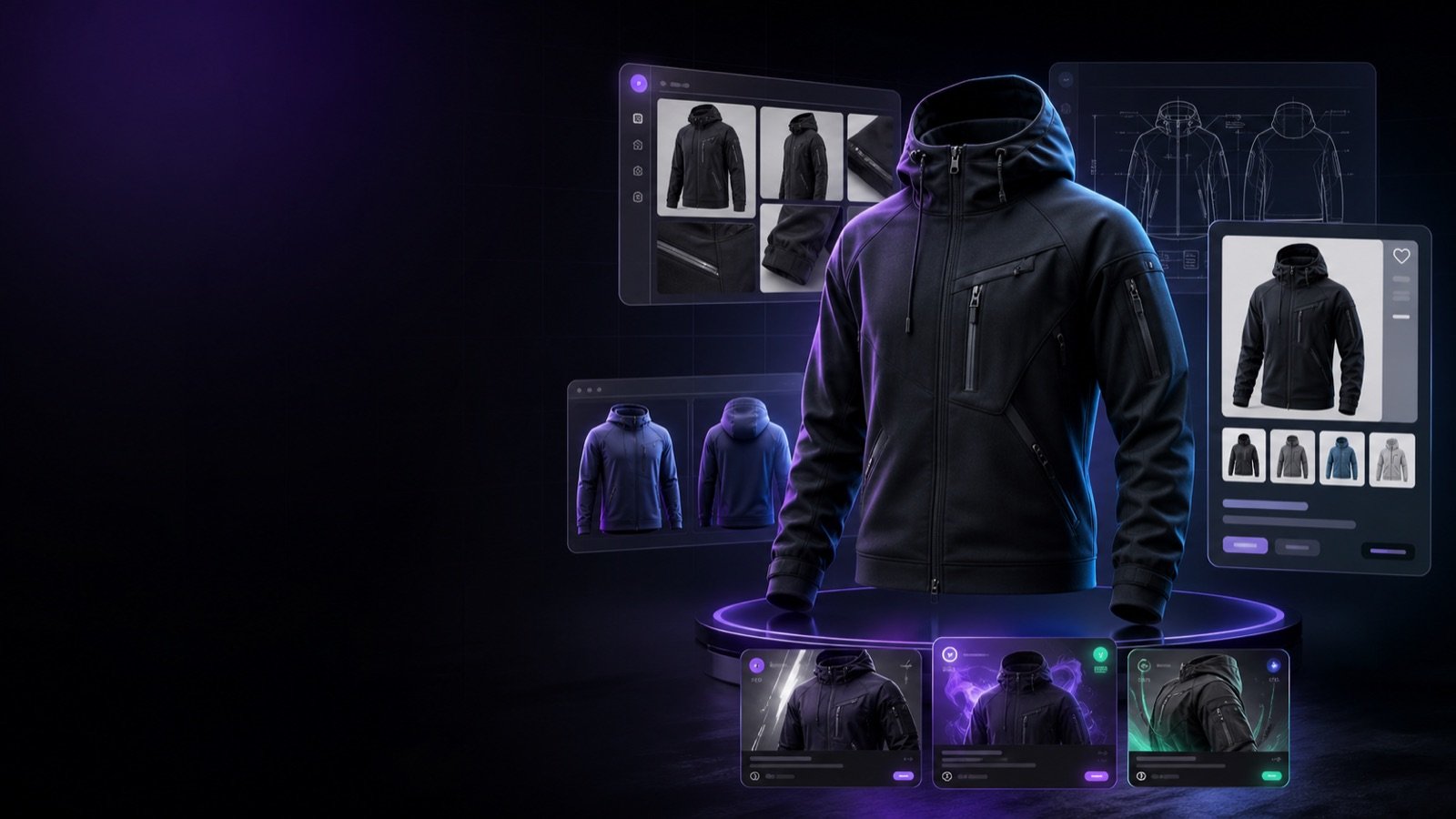
Ayzelify can then support a connected set of outputs instead of isolated images. Product concepts, catalog views, specialist category visuals, listing copy, technical notes, and campaign assets can begin from the same brief. The exporter remains responsible for the final record. AI speed becomes valuable only when it does not multiply contradictions across channels.
Use category-specific proof for Sialkot products
Different Sialkot sectors answer different buyer questions. Sportswear and teamwear buyers may need front and back views, fit direction, panel construction, fabric context, collar and cuff detail, colorways, sponsor placement, print or embroidery method, size range, packaging, and personalization options. Boxing and martial arts buyers may inspect glove shape, wrist closure, padding profile, stitching, headguard coverage, shin protection, materials, size, and branding areas.
Surgical instrument buyers need a different system: clean white-background views, exact instrument family, full geometry, side profile, scale, tip or jaw macro, serration or blade detail, hinge or box-lock construction, ratchet, handle, surface finish, markings, packaging, and labeling evidence. Generated detail can support a listing plan, but it cannot prove stainless-steel grade, hardness, passivation, sterility, intended use, registration, or clinical performance.
Leather goods, bags, gloves, and beauty products have their own decision details: grain and finish, stitching, hardware, lining, compartments, closures, dimensions, tool shape, finish, packaging, and private-label options. Ayzelify's specialist product workflows help teams start with the correct visual language. The export team should still compare every result with the real sample and use studio photography or inspection images when exact physical proof matters.
Turn approved products into complete marketplace and RFQ assets
An international buyer rarely decides from one hero image. Build a gallery that supports evaluation: clean product view, reverse or alternate view, side profile, detail crop, material or finish closeup, customization example, scale or dimensions, packaging, and a controlled use-case image where appropriate. Keep clean product evidence separate from expressive campaign scenes so the buyer can tell what is being offered.
Use the same approved facts to draft a searchable title, buyer-focused bullets, description, specification table, customization options, sample and MOQ context, packaging notes, FAQs, and RFQ prompt. Ayzelify's Alibaba workflow can connect a product concept to production views and listing preparation. The listing remains a draft until the exporter checks current marketplace fields, prohibited claims, category rules, trade terms, and every commercial promise.
The result should be reusable. An approved asset pack can support the exporter website, Alibaba, a buyer PDF, trade-delegation presentation, email follow-up, WhatsApp conversation, distributor page, and social campaign. Reuse improves consistency only when changes flow back to the product record. If the sample changes, update every channel rather than leaving an attractive but inaccurate listing online.
Keep certifications, capacity, and compliance outside the guessing layer
International competition depends on trust. Never ask an AI system to fill an empty certificate field, estimate monthly capacity, invent a buyer list, assume a material grade, create a test result, or promise a delivery date. Those are business records, not marketing flourishes. Present authentic certificates, audits, test reports, sample approvals, factory images, inspection records, packaging documents, and terms where they are relevant and current.
Regulated and performance-sensitive categories need tighter controls. Surgical and medical products may involve classification, registration, listing, labeling, Unique Device Identification, sterile-status, importer, distributor, and market-specific responsibilities. Protective sports equipment can involve material, impact, safety, and performance claims. AI can organize the content and point out review fields, but qualified people and real documentation must determine what can be published.
Trade numbers also change. Pakistan Bureau of Statistics publishes monthly, quarterly, and annual external-trade statistics. Use current official releases when making time-sensitive national or commodity claims, and name the period and source. For a city-level statement supplied by SCCI, attribute it to SCCI. GEO content becomes more trustworthy when it distinguishes current official data, organization-provided claims, factory evidence, and AI-generated explanation.
Build a Sialkot content cluster that leads buyers to action
A GEO page should answer the buyer's question directly: what does the supplier make, where is it made, which customization is available, what evidence can be reviewed, and what happens next? Create focused pages for each product family and buyer intent instead of one broad factory page. A sportswear manufacturer, surgical instrument exporter, leather supplier, and boxing equipment maker need separate terminology, images, FAQs, specifications, and internal links.
Connect the geographic answer to the relevant industry page, specialist workflow, product guide, Alibaba checklist, catalog guide, and RFQ route. Use descriptive headings, accurate image alt text, useful captions, concise answers, and FAQs that match real sourcing questions. Avoid pages that repeat Sialkot exporter or best manufacturer without adding product information. Search engines and answer engines need clear entities and relationships; buyers need evidence and a next step.
Measure business outcomes rather than image volume. Track the time from brief to approved listing, correction rate, percentage of catalog SKUs with complete views and facts, qualified inquiries, sample requests, response time, quote acceptance, and inquiry-to-order progress. A useful AI workflow does not merely produce more content. It helps the right international buyer understand the product faster and enter a better-informed sales conversation.
Common questions
How can AI help Sialkot exporters compete internationally?
AI can help Sialkot exporters convert verified product and factory information into product concepts, catalog image sets, marketplace listings, buyer presentations, specifications, RFQ content, and campaign assets faster. The exporter should still verify the product, commercial terms, capacity, certifications, compliance, and delivery commitments.
Which Sialkot export industries can use Ayzelify?
Ayzelify is useful for sportswear, teamwear, sports equipment, boxing and martial arts gear, leather products, gloves, bags, surgical instruments, beauty tools, apparel, and other categories that need product visuals, catalogs, marketplace content, and buyer presentations.
Can AI prove that a Sialkot factory meets international standards?
No. AI can organize and present verified evidence, but it cannot prove certification, test performance, audit status, factory capacity, material composition, medical-device status, or compliance. Buyers need authentic certificates, test reports, audit records, samples, inspections, and accountable supplier confirmation.
Can a Sialkot exporter use AI before making a physical sample?
Yes, for early product concepts, colorway selection, buyer presentations, catalog planning, and listing drafts. The visual should be labeled and treated as a concept until the factory confirms construction, materials, cost, dimensions, decoration method, and production feasibility through sampling.