Ayzelify home
Guide page
AI for Sportswear Manufacturers: Product Design to Catalog Workflow
Sportswear manufacturers have a different content problem from ordinary fashion brands. A buyer may ask for soccer kits, basketball uniforms, rugby jerseys, cycling sets, gymwear, compression pieces, warmups, tracksuits, club colorways, sponsor placements, number zones, fabric directions, size runs, and catalog-ready presentation before the factory has sampled every option. Ayzelify helps turn that early product direction into a controlled workflow: sportswear concept options, front and back kit views, fabric and trim directions, model or pose-based photoshoot images, listing drafts, product specifications, tech-pack notes, campaign assets, and buyer review material. The important rule is consistency. A teamwear kit, activewear set, or performance garment should keep the same sport, garment type, colorway, logo/artwork logic, fabric story, decoration method, and production limits from the first visual through the catalog page. Google helpful-content guidance favors pages that solve a real audience problem with useful detail, while Google image SEO guidance emphasizes crawlable images, relevant surrounding context, captions, and alt text. For sportswear manufacturers, that means every visual should help a buyer understand the product, not just decorate the page.
Build sportswear catalog assets
Short answer
Sportswear manufacturers can use AI to create faster concept options, team kit colorways, front and back product views, photoshoot images, catalog visuals, listing drafts, tech-pack starting points, and launch content. The workflow should still include human review for fabric, fit, logo rights, numbering rules, sponsor placements, customization claims, MOQ, lead time, measurements, decoration method, and production feasibility.
Why this matters
Sportswear manufacturers need repeatable product systems for team kits, jerseys, tracksuits, activewear, gymwear, and performance apparel, not one-off images that drift from production reality.
Ayzelify can help turn sport, buyer market, garment type, team color, logo/artwork, fabric direction, and customization rules into reviewable visual and commercial assets.
The workflow should keep concept art, catalog photos, listing copy, tech-pack notes, size details, and buyer outreach aligned around the same approved product record.
Sportswear SEO and GEO pages should answer buyer questions about use case, customization, material, decoration, colorways, ordering details, and review steps.
AI output is a faster draft layer. Final manufacturing decisions still need product, costing, compliance, artwork-rights, and sample-room review.
Practical guide
Start with the sport and garment system
Sportswear content fails when the first prompt is too vague. A soccer kit, basketball uniform, cycling set, tracksuit, compression top, rugby jersey, and esports jersey each carries different buyer expectations.
Start with the sport, garment type, complete set requirements, colors, logo/artwork direction, fabric notes, fit, size range, customization zones, sample terms, MOQ, packaging, and buyer market. That product record becomes the source for every visual and listing draft.
Create colorways before sampling every option
Sportswear buyers often want options: home and away colors, club palettes, sponsor treatments, stripe directions, panel layouts, trims, and matching bottoms. Generating those options before sampling helps the team focus production effort on the strongest direction.
Ayzelify can help create category-specific concepts while keeping the product grounded in sportswear logic. The review should check whether the design still looks like the requested sport and whether the factory can actually make it.
Keep teamwear views consistent
A teamwear buyer needs to see how the product holds together across front, back, side, detail, and worn views. If the front shows one garment and the back shows another, the content becomes a sales risk.
Use one approved product direction for catalog views, pose images, model photos, closeups, and marketplace crops. Check logo placement, sponsor areas, panel lines, names, numbers, trims, cuffs, waistband, and matching bottoms before the set moves forward.
Build catalog visuals for sourcing buyers
Catalog images should help buyers evaluate the product. For sportswear, that means clear views of silhouette, fabric direction, fit, decoration, trims, set completeness, and use context.
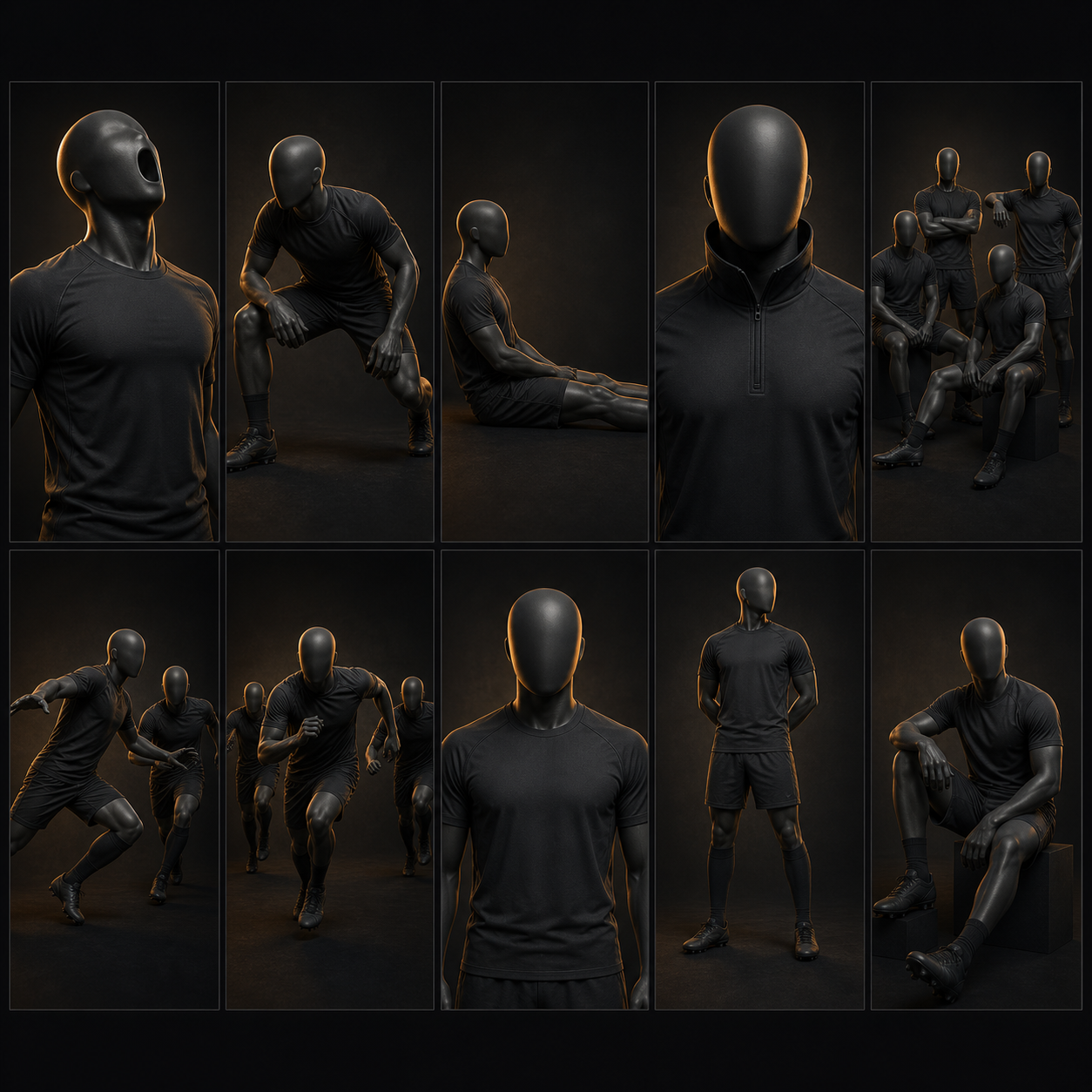
Ayzelify can help produce clean product visuals, model or pose-based photos, closeups, lifestyle images, and presentation-ready crops from the same reviewed concept. Strong captions and alt text then make the page clearer for buyers and search systems.
Turn the product record into listing copy
Once the visuals are selected, the same facts can drive Alibaba, Shopify, WooCommerce, WordPress, and buyer catalog copy. The listing should explain sport, garment type, material, customization, size options, packaging, MOQ, sample process, and inquiry path.
Do not let AI fill unknown business facts. Pricing, production capacity, lead time, certification, fabric performance, and shipping terms should only appear when the manufacturer can verify them.
Add tech-pack review before production handoff
Sportswear tech packs need more than a nice visual. They should capture measurements, BOM, fabric direction, stitching, trims, print or embroidery method, sublimation notes, labels, packaging, tolerances, QC checks, and sample comments.
Ayzelify can structure the draft, but the production team must verify it. Pattern, sampling, printing, embroidery, QC, and packing teams should review the file before it becomes a buyer or factory instruction.
Reuse approved assets for launch content
Approved sportswear visuals and facts can support ads, social content, buyer decks, WhatsApp messages, email follow-ups, marketplace banners, and ecommerce pages. This prevents the marketing team from creating a different product story after the catalog is approved.
The final workflow is simple: concept, review, catalog, listing, tech pack, launch content, and buyer follow-up, all from one product source.
Common questions
How can sportswear manufacturers use AI?
Sportswear manufacturers can use AI to draft teamwear concepts, sportswear colorways, front and back views, catalog photos, model images, listings, product specifications, tech-pack notes, ads, social posts, and buyer presentation assets.
What should a sportswear manufacturer review before publishing AI-generated assets?
Review sport accuracy, garment type, complete kit requirements, fabric, fit, size range, logo and sponsor rights, number placement, decoration method, MOQ, pricing, lead time, packaging, certifications, and production feasibility.
Can AI create buyer-ready teamwear catalogs?
AI can speed up the first draft of teamwear catalogs, but manufacturers should verify product facts, image consistency, artwork rights, measurements, materials, and manufacturing constraints before sending catalogs to buyers.
Why does sportswear content need a connected workflow?
Connected workflows keep product visuals, listing copy, tech-pack notes, ads, and buyer messages aligned so the same jersey, kit, or activewear product is described consistently across every channel.