Short answer
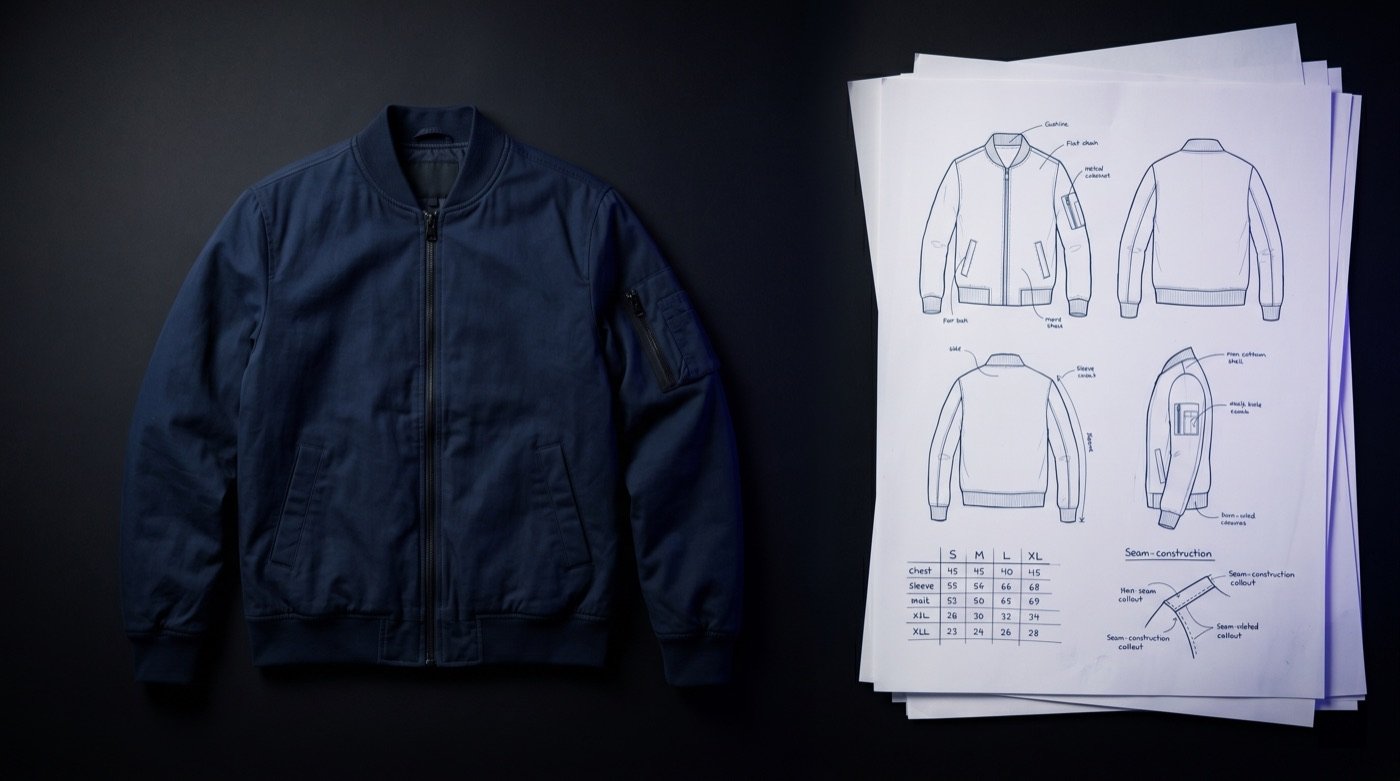
A useful clothing tech pack gives factories enough reviewed information to quote, sample, check, and repeat a garment: references, measurements, materials, construction notes, embellishments, labels, packaging, QC, and sample comments.
Why this matters
A useful tech pack gives the factory enough information to understand the garment without guessing from a moodboard or product photo alone.
The core sections are product overview, flat or reference images, measurements, bill of materials, construction notes, embellishments, labels, packaging, QC checks, and sample comments.
Ayzelify can help create structured tech-pack drafts from images, quantity, and guidelines, then export files for review.
No AI-generated tech pack should be treated as final until a human production team checks measurements, materials, tolerances, trims, costing assumptions, and factory feasibility.
Practical guide
A tech pack should remove guesswork
A factory cannot produce accurately from a vague inspiration image. It needs the product facts: what the garment is, how it should fit, what materials are expected, where trims and logos go, how seams are constructed, and what must be checked before approval.
The best tech packs act like a shared source of truth. They help the founder, merchandiser, pattern maker, sample room, and production manager discuss the same garment instead of interpreting separate notes.
Measurements need points, units, and tolerances
Factories need more than a general size chart. They need clear points of measure, units, base size, grading logic, and tolerances. If a chest width, sleeve length, inseam, or body length can be measured in multiple ways, the tech pack should define how.
Generated measurements are a starting point, not a production guarantee. They should be checked against the real sample, brand fit block, target market, and category standards before the tech pack is sent out.
The BOM connects the idea to sourcing
The bill of materials explains the ingredients of the product: shell fabric, lining, rib, zipper, drawcord, eyelets, labels, hangtags, packaging, thread, print method, embroidery, and trims. Missing BOM details create sourcing delays and price confusion.
For exporters and factories, BOM clarity also supports quotation. If the buyer wants a heavyweight fleece hoodie, sublimated jersey, leather jacket, or technical shell, the material and trim choices affect sample cost, production time, and minimum quantity.
Construction notes explain what images cannot
A product image can show the overall look, but it cannot fully explain stitch type, seam finish, reinforcement, pocket bag, lining method, label placement, print placement, or stress-point bartacks. Those details belong in construction notes and callouts.
When a factory reads the tech pack, it should know what to build, what to question, and what must be confirmed in the sample. That is the difference between a visual concept and a production document.
Use Ayzelify for the draft, then review for production reality
Ayzelify can help apparel teams generate tech-pack drafts from product images, quantities, and guidelines. The draft can include product info, measurements, BOM, embellishments, construction notes, customization requests, and QC checks.
The final step is review. Before a tech pack becomes factory-facing, confirm every claim, measurement, material, trim, decoration method, packaging detail, and production instruction with the team responsible for making the garment.
Common questions
What should a clothing tech pack include?
A practical clothing tech pack should include product overview, reference images or flats, measurement specs, size chart, bill of materials, construction notes, trims, embellishments, labels, packaging, QC checks, and sample revision comments.
Can AI create a final production tech pack?
AI can help create a structured first draft, but measurements, tolerances, materials, costing, sourcing, and production feasibility should be reviewed by a human production team before factory use.
Why do factories need tech packs?
Factories use tech packs to quote, source materials, make samples, check construction, reduce avoidable questions, record revisions, and keep buyers, merchandisers, and production teams aligned.
Can Ayzelify create product images from uploaded references?
Yes. Ayzelify workflows can use uploaded product references or brand inputs to generate product-focused visuals for review.