Ayzelify home
Guide page
AI for Apparel Exporters: Complete Workflow Guide
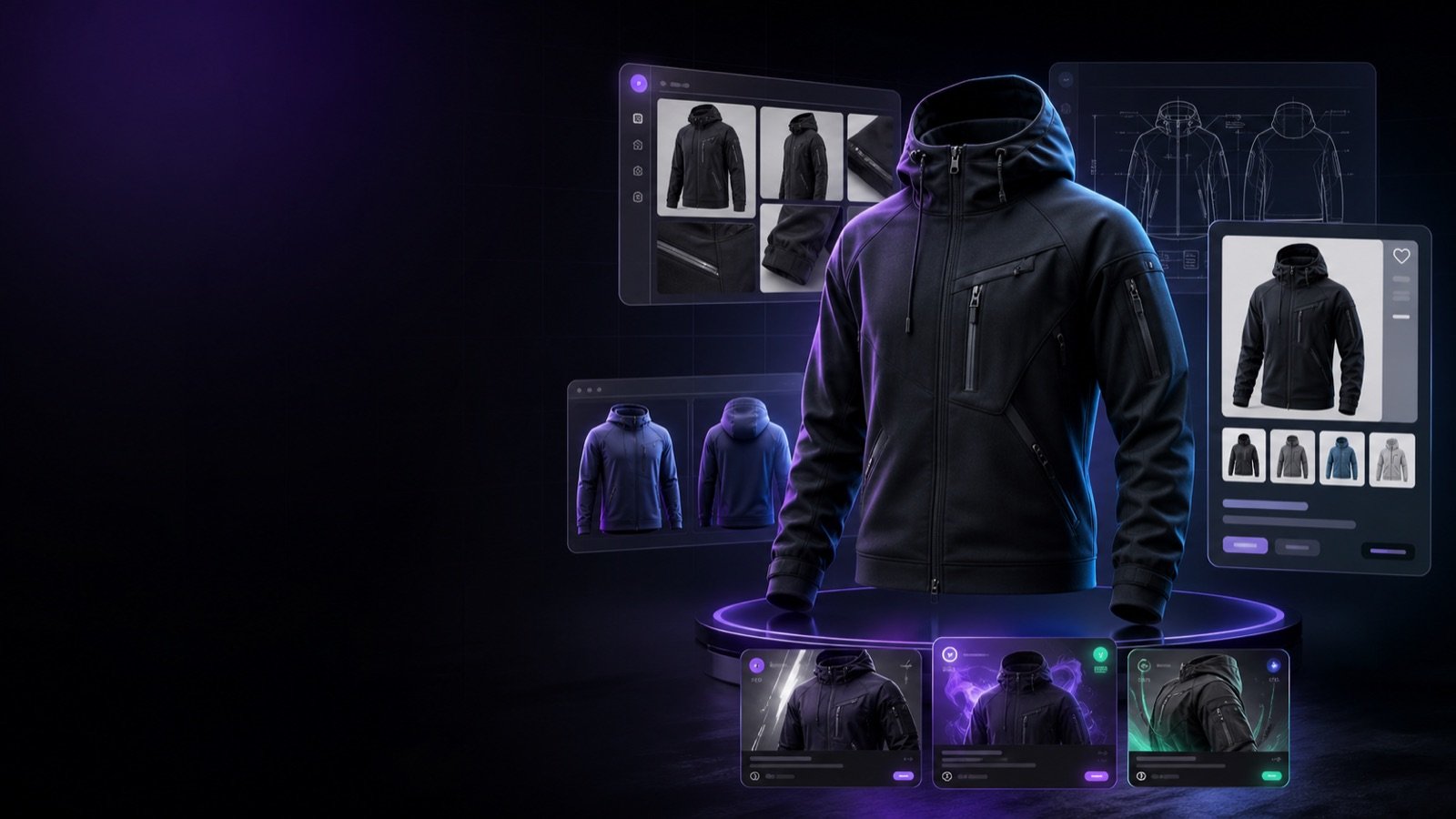
Apparel exporters rarely need a single image. They need a repeatable commercial workflow that starts with a product idea, sample, logo, buyer reference, or old catalog photo and turns it into buyer-ready assets: product concepts, front and back views, catalog images, model photos, ghost mannequin views, Alibaba listing drafts, product specifications, tech-pack notes, ad creatives, social posts, and website content. Ayzelify is built around that full export workflow. It helps factories, Sialkot manufacturers, sportswear suppliers, streetwear makers, teamwear exporters, leather apparel teams, and ecommerce operators create faster first drafts while keeping review control over product facts, materials, measurements, customization options, MOQ, packaging, lead time, and production feasibility. Google image guidance emphasizes helpful surrounding context, descriptive alt text, and crawlable images. Google Product structured data guidance reinforces that visible content and product facts should stay consistent. Google helpful-content guidance favors pages that answer real user questions, and marketplace/product-media guidance from platforms such as Shopify and Alibaba reinforces the practical need for complete, accurate product information. This guide shows how apparel exporters can use AI across the whole product-to-buyer pipeline without treating generated content as unchecked production truth.
Build apparel export assets
Short answer
An apparel exporter AI workflow should connect product design, visual asset generation, listing copy, product specifications, tech-pack notes, ad creatives, and buyer review in one controlled process. Use AI to create faster drafts, then verify product facts, materials, measurements, customization, pricing, MOQ, packaging, lead time, artwork rights, and factory feasibility before publishing or sending to buyers.
Why this matters
Apparel exporters need connected assets, not isolated AI images: buyer visuals, product pages, Alibaba listings, tech packs, ads, social posts, and catalog content should describe the same product.
Ayzelify helps turn a product idea, reference image, sample photo, logo, or buyer direction into reviewable commercial assets for export sales and ecommerce workflows.
The exporter workflow should preserve product truth: material, construction, color, size range, decoration method, MOQ, sample timing, packaging, lead time, and customization claims need human review.
Strong SEO and GEO content comes from useful product context, clear headings, internal links, accurate image captions, FAQs, and product facts that can support search and answer engines.
The goal is faster buyer communication and better asset consistency, not replacing factory judgment, sampling, compliance review, costing, or final production approval.
Practical guide
Start with one product truth source
Exporter workflows become weak when images, listing copy, tech-pack notes, WhatsApp messages, and catalog files all describe slightly different products. Start by writing one product truth source before generating anything.
That source should include category, target buyer, material, colorways, size range, trims, decoration method, logo placement, customization options, packaging, MOQ, sample timing, lead time, and any claim that must be verified before publication.
Create concepts before cutting samples
Factories can lose time when every buyer direction goes straight into sampling. AI concepting helps exporters show more options before fabric sourcing, pattern work, sample stitching, and photoshoots begin.
Ayzelify can help build product directions, colorways, front and back views, and buyer presentation ideas. The team can then choose which concepts are strong enough for technical review and sampling.
Build catalog and marketplace visuals
Once the product direction is selected, exporters need usable visual sets: clean product images, model photos, ghost mannequin views, closeups, lifestyle images, and marketplace-ready crops.
These visuals should support buyer evaluation. A strong set shows front, back, detail, scale, fit, decoration, and use context without changing the garment the factory can actually produce.
Turn approved visuals into listing drafts
Alibaba, Shopify, WooCommerce, WordPress, Etsy, and buyer catalog pages need more than images. They need clear titles, product descriptions, specifications, customization options, FAQs, image captions, and inquiry prompts.
Ayzelify helps draft this content from the same product source. Exporters should still review every material, certification, MOQ, price, capacity, packaging, shipping, and lead-time claim before publishing.
Add tech-pack review before production
A tech pack should reduce factory questions. It needs reviewed measurements, BOM, construction notes, trims, labels, decoration method, tolerances, QC checks, packaging, and sample comments.
AI can structure a draft, but production teams must verify it. Exporters should never let a generated tech pack become the final factory instruction without checking the sample, materials, measurements, and feasibility.
Use approved assets for ads and outreach
After product visuals and facts are reviewed, the same approved material can become ad creatives, social posts, email visuals, WhatsApp sales messages, Pinterest images, marketplace banners, and buyer deck slides.
This keeps marketing aligned with production reality. Exporters can promote the product faster without inventing details that the factory has not approved.
Publish only after final exporter review
The final review should be operational, not only visual. Check product accuracy, images, alt text, descriptions, specifications, pricing, MOQ, sample terms, packaging, shipping terms, certifications, artwork rights, and production feasibility.
That review is what turns AI output into useful export content. Ayzelify can compress the drafting work, but the exporter remains responsible for the facts buyers use to make sourcing decisions.
Common questions
How can apparel exporters use AI?
Apparel exporters can use AI to draft product concepts, catalog images, model and ghost mannequin photos, Alibaba listing copy, product specifications, tech-pack notes, ad creatives, social posts, and buyer presentation content.
Can AI replace factory review?
No. AI can speed up drafts, but human review is still required for materials, measurements, construction, pricing, MOQ, lead time, packaging, compliance claims, artwork rights, and production feasibility.
What should exporters prepare before generating content?
Prepare the product category, buyer market, reference images, materials, colorways, logo or artwork, size range, customization options, packaging, MOQ, sample policy, lead time, and any claims that must be verified.
Does this workflow support Alibaba sellers?
Yes. Ayzelify can help create Alibaba-style product images, listing drafts, specifications, FAQs, and buyer-facing content, but exporters should review all business and product facts before publishing.