Ayzelify home
Guide page
High-Demand Product Research to Listing: A Safer Workflow for Exporters
High-demand product research is useful only when it leads to an original, reviewable offer. Exporters can look at marketplace demand, buyer questions, product gaps, price bands, materials, and image patterns, but they should not turn research into copied listings, copied photos, copied brand marks, or unsupported product claims. Alibaba seller guidance connects listing quality with product names, keywords, photos, videos, descriptions, and the amount of product detail provided. Alibaba seller education also stresses that product pictures shape the first buyer impression. Google Product structured data guidance shows why product pages should keep product facts, images, and structured data aligned for richer search understanding. Chrome Web Store Limited Use guidance matters when product research uses browser capture: the workflow should stay tied to a clear user-facing action. This guide explains how exporters can move from high-demand product research to original Ayzelify assets using Trend Clone, Collection Studio, Listing Generator, and Alibaba review checkpoints.
Create original product listing assets
Why this matters
High-demand research should identify buyer intent, category pressure, product gaps, material direction, price context, and image requirements, not a competitor page to duplicate.
A safer workflow separates useful market signals from protected identity such as logos, watermarks, brand names, copied descriptions, reviews, distinctive artwork, and certification claims.
Trend Clone and browser capture can speed up reference intake when the user clearly initiates the action, but the generated brief should be rewritten around the exporter own product facts.
Collection Studio helps convert the research signal into original product concepts, while Listing Generator turns approved directions into reviewable marketplace copy and structured fields.
SEO and GEO value comes from consistent product images, titles, specifications, FAQs, alt text, internal links, and Product structured data that describe the same original product.
Practical guide
Start with demand signals, not a copied page
High-demand research should help exporters understand where buyer attention is going. Useful notes include product category, repeated search language, materials, use cases, visible construction details, buyer objections, and the image views competitors use to answer sourcing questions.
The unsafe version is copying the page that surfaced the idea. A competitor title, photo set, logo, packaging style, description, review language, and certification claims belong to that seller. Reusing them creates trust and marketplace risk.
A better research brief says: this category is active, buyers seem to care about these details, and our factory can create a different product direction that answers those needs.
Separate inspiration from protected identity
A clean research workflow has a removal step. Delete copied brand names, logos, watermarks, protected graphics, review claims, certificates, exact wording, and anything that would make the generated output look like another supplier's property.
Keep the neutral signals: product type, buyer market, material direction, feature gaps, size range, required views, packaging questions, and customization opportunities.
This gives Ayzelify a better brief. The system can work from product truth and market direction instead of trying to imitate a specific competitor asset.
Use Collection Studio to create the original direction
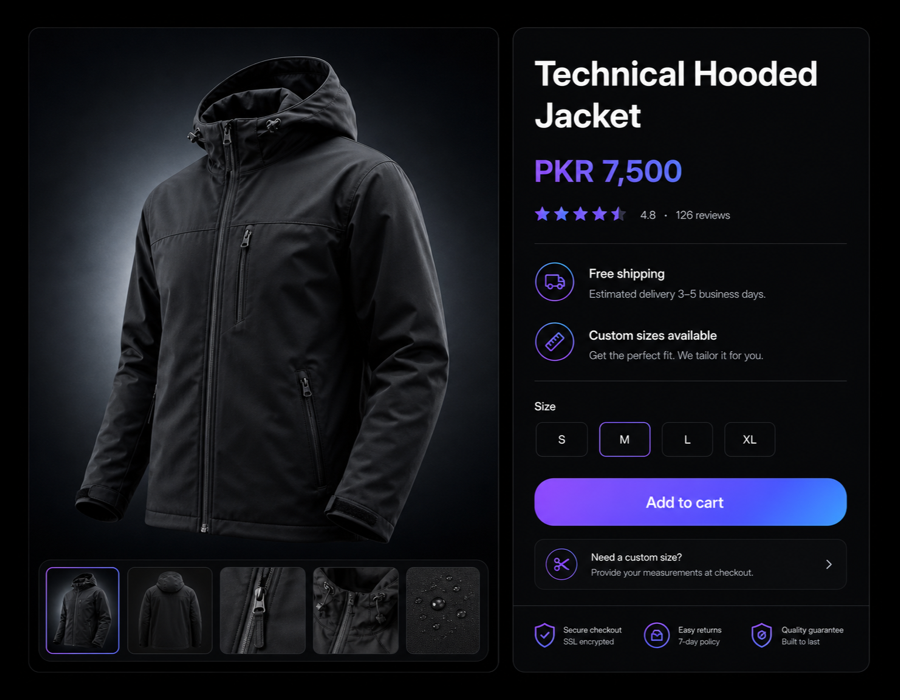
Once the research brief is clean, move into concept generation. Collection Studio is the right place to define the actual product: silhouette, fabric, colorway, trims, panels, logo placement, buyer market, and variation ideas.
The output should not be one final image. Exporters need options they can review with sales and production: which direction is feasible, which looks different enough, which fits MOQ and material reality, and which can become a buyer-facing listing.
Approved concepts can then become front, back, side, closeup, and spec directions instead of remaining as loose inspiration images.
Build the listing from product facts
The listing should be generated from confirmed facts: material, construction, size range, customization method, packaging, MOQ, sample policy, lead time, buyer use case, and available variants.
Alibaba guidance rewards more complete product detail, but more detail is only useful when it is accurate. Do not let AI invent certifications, waterproof ratings, factory capacity, price guarantees, delivery timelines, or buyer logos.
Ayzelify Listing Generator can draft title, keywords, attributes, descriptions, specifications, FAQs, and marketplace metadata. Treat that output as a structured first draft for review, not a final upload.
Check SEO, GEO, and marketplace consistency before launch
A strong product page is consistent across the parts a buyer and search system can inspect: image gallery, alt text, product name, description, specs, FAQ, internal links, and structured data. If those pieces describe different products, the page loses clarity.
For Alibaba and ecommerce pages, review image quality, title intent, keywords, description completeness, category fields, technical sheet, size chart, and conversion path. Then verify that the product is original and that the seller can support the claims.
The safer workflow is slower than copying, but faster than fixing a bad listing after buyers notice weak facts or copied material.
Common questions
What is high-demand product research for exporters?
It is the process of studying buyer demand signals, category patterns, product gaps, common materials, price context, image needs, and sourcing questions so an exporter can create a stronger original product offer.
Can exporters use competitor listings as product references?
They can study public marketplace signals, but they should not copy competitor photos, logos, brand names, descriptions, reviews, packaging identity, certifications, or protected product design. The final offer should be original and fact-checked.
How does Ayzelify help move from research to listing?
Ayzelify can help capture a reference, create original product concepts in Collection Studio, generate marketplace images and listing metadata, and organize technical sheets, size charts, descriptions, and FAQs for human review.
What should exporters review before publishing an Alibaba listing?
Review product name, images, material, sizes, MOQ, customization, packaging, lead time, price logic, certifications, specifications, title, keywords, description, and whether every claim matches the real product.