Short answer
Generic AI image tools often fail clothing workflows because apparel teams need product accuracy, repeatable views, material detail, model or mannequin outputs, listings, ads, and review steps, not disconnected prompt experiments.
Why this matters
Generic image tools often optimize for visual novelty instead of product accuracy, repeatability, and channel readiness.
Clothing workflows need connected outputs: catalog images, detail views, model shots, copy, specifications, ad assets, and review checklists.
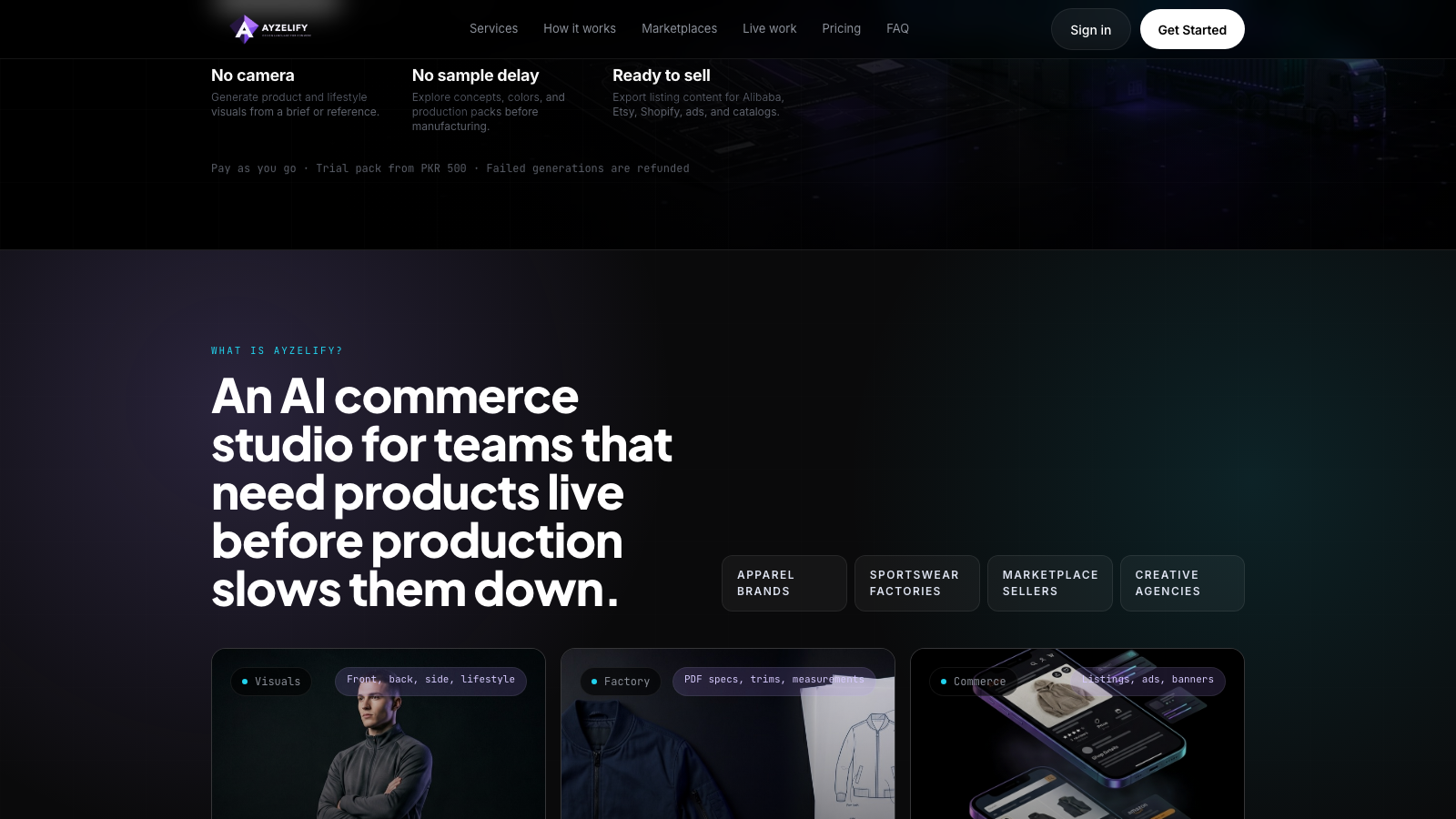
Ayzelify is built around apparel and commerce jobs rather than one-off prompt experiments.
The right standard is not whether an image looks impressive. It is whether the asset helps a buyer inspect, understand, trust, and purchase the product.
Practical guide
Pretty is not the same as product-ready
A generic image generator can create a visually strong campaign-style image. That does not mean it has created a useful product asset. Clothing buyers need to inspect fit, silhouette, fabric, seams, decoration, trims, and color.
If the image cannot be repeated across front, back, side, model, and detail views, the team still has to rebuild the product story manually.
Clothing teams need connected workflows
A brand does not stop after one image. The same product may need a Shopify gallery, Alibaba listing, Etsy listing, catalog PDF, Instagram carousel, paid ad, tech-pack notes, and buyer email visuals.
Ayzelify is organized around those jobs. The product context flows into design, photoshoot, listing, advertising, and launch assets, which reduces the repeated prompt rewriting that slows generic tools down.
Marketplace content needs facts, not decoration
Alibaba, Etsy, Shopify, and B2B catalog pages need clear names, images, descriptions, specifications, shipping or inquiry context, and buyer-friendly FAQs. A beautiful AI picture cannot replace missing product facts.
This is where generic image tools often fail. They make the visual, then leave the team to assemble product copy, title structure, image order, and channel-specific details from scratch.
Use the right standard for AI-assisted product content
Google's AI content guidance focuses on usefulness and quality rather than the tool used to produce content. For clothing products, that means the final asset must answer real buyer questions and avoid unsupported claims.
The practical test is simple: can the buyer understand what the garment is, how it looks, what can be customized, and what to do next? If not, the output is still unfinished.
Common questions
Why are generic AI image tools hard to use for clothing products?
They usually focus on individual images, while clothing workflows need consistent product views, accurate details, listing copy, marketplace assets, ad variants, and reviewable production context.
What should clothing brands look for in an AI product tool?
Look for repeatable product views, model and mannequin options, channel-ready listings, ad assets, internal linking between workflows, and clear review controls for product accuracy.
Does Ayzelify replace human product review?
No. Ayzelify speeds up asset creation, but teams should review material claims, sizing, logo treatment, availability, and production details before publishing.
Can Ayzelify create product images from uploaded references?
Yes. Ayzelify workflows can use uploaded product references or brand inputs to generate product-focused visuals for review.